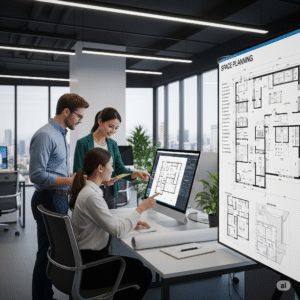
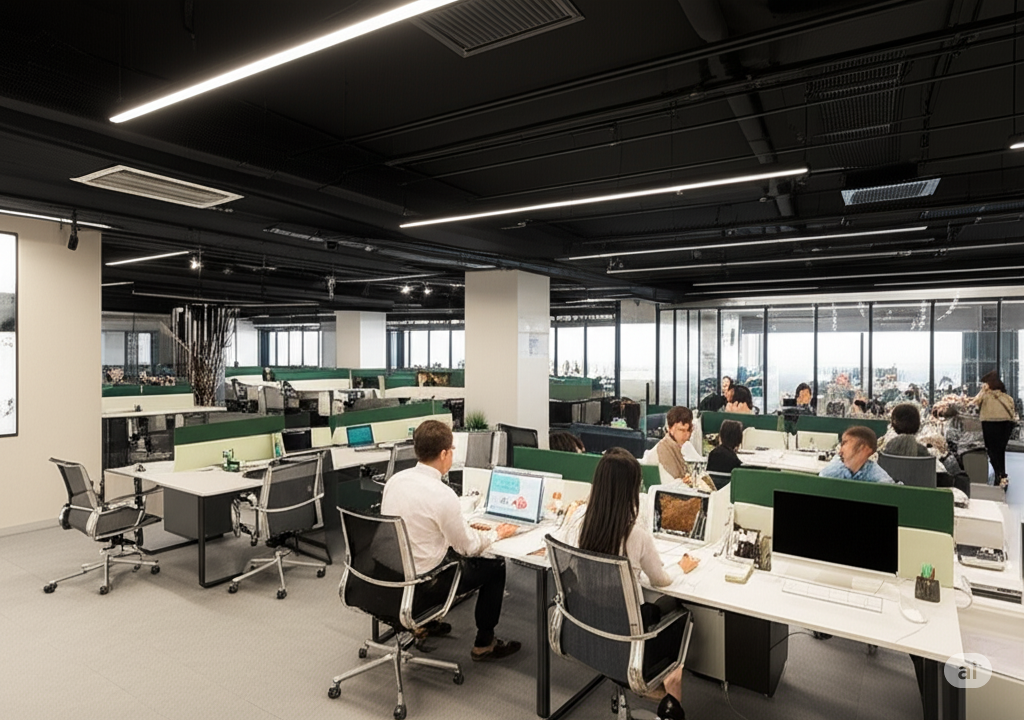

In today’s fast-evolving work culture, where flexibility, innovation, and collaboration are at the core of business success, office design is no longer just about aesthetics. It’s about functionality—and at the heart of that functionality lies space planning.
Whether you’re running a startup with 10 people or a corporation with 1,000 employees, effective space planning is crucial for productivity, morale, and long-term success. A well-planned office doesn’t just look good—it works well, adapts easily, and supports every employee in doing their best work.
In this article, we’ll dive deep into what space planning is, why it’s essential, and how it directly influences productivity in the office environment.
What Is Space Planning?
Space planning is the process of organizing and arranging physical space in a way that meets the functional and aesthetic needs of a business. This includes:
- Determining the purpose of each area
- Allocating space based on usage and occupancy
- Optimizing furniture layout
- Ensuring traffic flow
- Incorporating flexibility for future growth
Effective space planning considers not only square footage, but also human behavior, departmental needs, technological infrastructure, and even company culture.
1. Space Planning Improves Workflow Efficiency
Poorly arranged offices often cause wasted time, confusion, and frustration. If employees have to walk across the entire office to consult a colleague or find equipment, productivity suffers.
How Space Planning Helps:
- Proximity planning: Place departments that collaborate closely near each other.
- Defined zones: Create clear work zones for focus, meetings, and collaboration.
- Optimized traffic flow: Eliminate bottlenecks and high-traffic disruptions.
A well-planned layout keeps people, resources, and tasks flowing smoothly, reducing delays and boosting output.
2. Supports Employee Well-Being and Comfort
Physical comfort and psychological well-being have a direct impact on performance. Bad layouts can lead to eye strain, back pain, fatigue, and even burnout.
How Space Planning Helps:
- Ensures ergonomic workstation placement
- Incorporates natural light and adjustable lighting
- Adds quiet zones for concentration
- Considers noise levels, air circulation, and personal space
By creating an environment where employees feel physically and mentally comfortable, space planning enhances both well-being and long-term productivity.
3. Maximizes Use of Available Space
Many businesses either overcrowd their office or leave valuable space unused. This is often due to poor planning or reactive decisions.
How Space Planning Helps:
- Helps you visualize the best layout before purchasing furniture
- Identifies multi-functional areas (e.g., a lounge that doubles as a meeting space)
- Avoids unnecessary square footage, saving on real estate costs
Especially for small or growing companies, space planning ensures every square foot works toward your business goals.
4. Boosts Collaboration and Innovation
Creativity doesn’t happen in a vacuum—it requires interaction. But forced collaboration in cramped or noisy environments often has the opposite effect.
How Space Planning Helps:
- Incorporates open spaces for brainstorming and teamwork
- Includes casual meeting areas like lounges or café-style tables
- Balances openness with private zones for focused work
The right space inspires collaboration without sacrificing individual productivity. It supports how your team actually works, not how you think they should work.
5. Reduces Workplace Distractions
Distractions in the workplace come in many forms: loud conversations, poor acoustics, awkward walkways, or visual clutter.
How Space Planning Helps:
- Strategically places noisy teams away from quiet departments
- Uses acoustic panels, partitions, and layout adjustments to control noise
- Designs paths to minimize foot traffic around focused work zones
The fewer the distractions, the greater the concentration—and space planning plays a huge role in creating that balance.
6. Enhances Organizational Culture and Branding
Your office space is a physical representation of your company culture. Whether you’re a creative agency or a law firm, your layout should reflect your values.
How Space Planning Helps:
- Reinforces your brand identity through colors, design elements, and layout choices
- Encourages a culture of openness, creativity, or structure, depending on goals
- Makes clients and visitors feel welcome and aligned with your brand
Space planning brings your values to life in the form of spatial experiences.
7. Facilitates Flexibility and Scalability
One of the biggest space planning mistakes is designing an office only for today. Modern businesses need to adapt—new hires, remote work, restructuring—all require spatial adjustments.
How Space Planning Helps:
- Uses modular furniture and movable walls
- Leaves open zones that can be repurposed
- Plans with future growth in mind
Scalable layouts help your business grow without the need for constant redesign or relocation.
8. Improves Communication Flow
Office layout has a surprising impact on how and how often employees communicate.
How Space Planning Helps:
- Creates natural interaction points (e.g., shared printers, coffee stations)
- Positions managers for accessibility
- Encourages cross-team interaction through open zones
When communication is easy, ideas spread faster—and projects move more smoothly.
9. Reduces Operational Costs
Believe it or not, good space planning can save money—often significantly.
How Space Planning Helps:
- Avoids over-investment in unnecessary furniture or square footage
- Reduces energy costs by optimizing light and airflow
- Helps minimize renovations by getting it right the first time
Even small businesses can see major savings through smart space decisions.
10. Adapts to Hybrid and Remote Work Trends
Today’s offices must serve in-person employees, hybrid workers, and fully remote teams. Space planning helps meet all those needs.
How Space Planning Helps:
- Provides hot-desking and shared workspaces
- Includes video conferencing areas
- Allows for flexible work hours without spatial conflicts
Instead of resisting remote work, space planning embraces it—designing spaces that serve every work style.
Key Elements to Consider in Office Space Planning
To truly make your space productive, keep these space planning fundamentals in mind:
🔹 Workstation Arrangement
Group employees by function, team, or communication needs—not just by available space.
🔹 Furniture and Equipment Layout
Don’t cram furniture for the sake of numbers. Leave room for movement and comfort.
🔹 Traffic Flow
Avoid choke points. Walkways should be clear and wide enough for safe, easy navigation.
🔹 Zoning
Divide areas based on purpose—quiet, collaborative, executive, etc.
🔹 Lighting and Ventilation
Integrate as much natural light as possible and ensure proper airflow for comfort.
🔹 Acoustics
Plan for sound control, especially in open or echo-prone environments.
🔹 Storage Solutions
Provide ample, accessible storage to avoid clutter and improve organization.
Common Space Planning Mistakes to Avoid
- ❌ Copying trendy layouts without considering your business needs
- ❌ Ignoring employee feedback during the design phase
- ❌ Overcrowding workstations to fit more desks
- ❌ Forgetting about accessibility and safety regulations
- ❌ Designing static layouts with no room for future changes
Avoiding these pitfalls can save you time, money, and stress in the long run.
How to Get Started With Office Space Planning
If you’re planning a new office or a redesign, follow these steps:
1. Analyze Your Space and Needs
Take inventory of your current space, team size, business goals, and workflows.
2. Consult Employees
Ask for feedback on what works and what doesn’t.
3. Define Objectives
Is your goal collaboration? Quiet focus? A hybrid model? Know your priorities.
4. Work With a Space Planner or Designer
Professionals can offer insights you may overlook and help you avoid costly mistakes.
5. Use Technology
Tools like AutoCAD, SketchUp, or space planning apps help visualize your layout before committing.
Conclusion: Plan Smart, Work Better
Space planning isn’t just an architectural concern—it’s a strategic business decision. The right office layout improves productivity, encourages collaboration, enhances employee well-being, and reflects your brand culture.