Author name: kgdesignspace@gmail.com

Uncategorized

Why Space Planning Is the Backbone of Productive Office Design

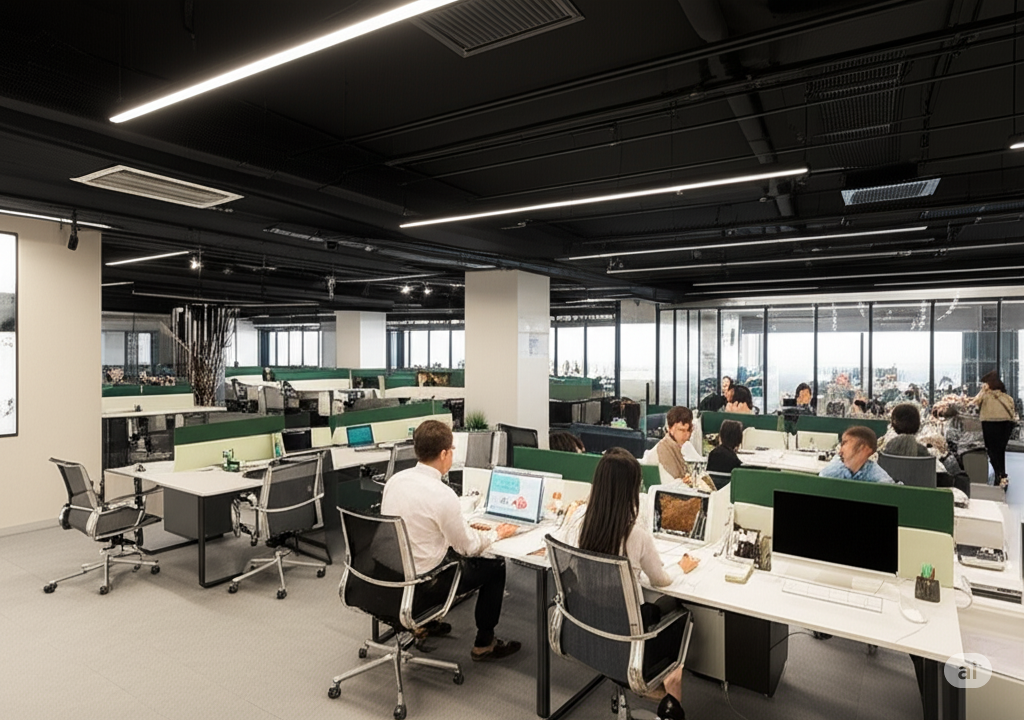
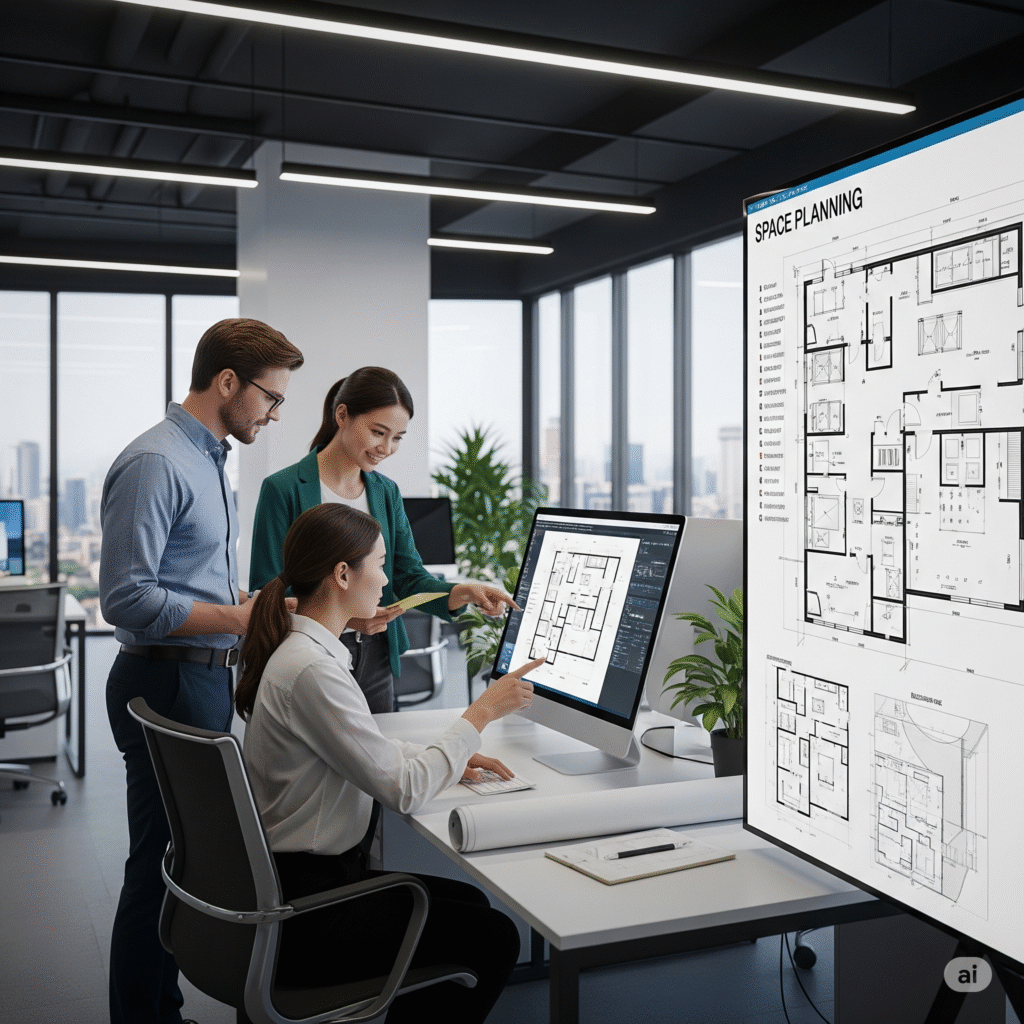
In today’s fast-paced business world, office design is more than just choosing furniture or applying a fresh coat of paint. It’s about creating a space that enhances productivity, supports collaboration, improves employee well-being, and adapts to ever-evolving work styles. At the heart of all this lies one fundamental principle: space planning. Whether you’re setting up a new office or redesigning an existing one, space planning plays a crucial role in determining how your team works, communicates, and thrives. This blog explores why space planning is essential for a productive office design and how it can transform your workplace experience. What Is Space Planning? Space planning is the strategic organization and arrangement of physical spaces to maximize their efficiency, functionality, and usability. In the context of office design, it involves: Good space planning ensures that every square foot of the office contributes to productivity and employee satisfaction. 1. Improves Workflow and Efficiency An intelligently planned office space removes physical and psychological barriers to productivity. For example: When employees can move and work freely without unnecessary disruption, their focus and output naturally increase. 2. Boosts Employee Morale and Satisfaction Your office environment has a profound impact on how your employees feel at work. A cramped or cluttered layout can create stress and discomfort, while a well-planned space: Employees who feel comfortable in their environment are more likely to be engaged, satisfied, and loyal to your organization. 3. Supports Collaboration and Communication Today’s workplaces often thrive on teamwork, creativity, and communication. A successful office layout balances open collaboration areas with quiet zones. Space planning makes this possible by: By fostering spontaneous collaboration without disrupting focused work, space planning helps teams work smarter. 4. Adapts to Changing Work Styles The modern office isn’t static. Hybrid work, remote collaboration, hot-desking, and flexible schedules are redefining how space is used. Space planning allows you to: With thoughtful planning, your office can evolve alongside your team’s needs. 5. Enhances Space Utilization and Cost-Effectiveness Renting or owning commercial real estate is expensive. Without a proper plan, businesses may waste space on unused areas or unnecessary features. Smart space planning helps you: By making the most of your physical environment, space planning turns real estate into a strategic asset rather than a passive expense. 6. Reflects Company Culture and Brand Identity Your office is a physical representation of your organization’s values and culture. Whether you aim to portray innovation, professionalism, creativity, or inclusivity, space planning ensures that your layout tells the right story. When your workspace reflects your mission and values, it strengthens your brand and improves team cohesion. 7. Promotes Health, Safety, and Accessibility Post-pandemic office designs have re-emphasized health, safety, and well-being. Through effective space planning, you can: Healthy employees are not only happier but also more productive and resilient. 8. Supports Focus and Minimizes Distractions A noisy or chaotic environment kills concentration. Through space planning, you can separate zones based on noise levels and activities. For example: Employees can perform better when they are given the right environment to concentrate. 9. Facilitates Better Supervision and Management Supervisors and team leaders benefit from clear sightlines and strategic workstation layouts. With space planning, you can: 10. Future-Proofs the Office Trends come and go, but the core need for adaptable, user-friendly workspaces remains. Good space planning: A future-proof layout reduces the need for frequent and costly overhauls. How to Approach Office Space Planning Effectively To ensure successful office design through space planning, follow these steps: 1. Assess Needs and Goals Identify your team size, department structure, daily workflows, and goals. Understand your work culture and how people prefer to work. 2. Involve Employees Include employees in surveys or feedback sessions to understand their needs. Their insights lead to user-centric designs. 3. Collaborate with Professionals Interior designers, architects, and workplace consultants can help translate ideas into practical plans. 4. Use Planning Tools Leverage CAD software or digital space planning tools to experiment with layouts before implementation. 5. Plan for Growth Always leave room for expansion. Avoid cramming every inch with permanent fixtures. Final Thoughts Space planning isn’t just about aesthetics—it’s the foundation of a productive, healthy, and forward-thinking office environment. A well-planned space boosts efficiency, fosters collaboration, minimizes distractions, and reflects your company culture—all of which contribute to overall business success. Investing time and resources into space planning is not a luxury; it’s a necessity for any organization that values its people and its performance.
Uncategorized

5 Space Planning Tools Every Designer Should Know About

In the fast-paced world of architecture, interior design, and office planning, professionals are constantly expected to visualize, design, and execute functional spaces that are both beautiful and efficient. Whether designing a cozy studio apartment or a corporate headquarters, one critical element remains central to success: space planning. Thanks to advances in technology, designers today have access to a wide range of space planning tools that make their jobs easier, faster, and far more accurate. These tools allow for 2D and 3D visualizations, seamless collaboration, furniture placement, and even real-time material selection. In this blog, we’ll explore the five most powerful and widely used space planning tools that every designer should know about, with a detailed look at their features, benefits, and ideal use cases. What Are Space Planning Tools? Before we dive into the top tools, it’s essential to understand what space planning tools actually are. Space planning tools are digital applications or software platforms that allow designers, architects, or planners to create accurate layouts of physical spaces. They help in: These tools help bridge the gap between concept and execution, saving time and reducing costly errors in real-world builds. Top 5 Space Planning Tools for Designers Let’s explore the most essential tools in the space planning world that are helping designers shape the environments of tomorrow. 1. SketchUp – The Versatile 3D Modeling Powerhouse Ideal for: Architects, Interior Designers, Space Planners, Contractors 🔹 Overview: SketchUp is one of the most popular 3D modeling tools used in architecture and interior design. It offers an intuitive interface that enables both beginners and professionals to create accurate, detailed, and scalable models of real spaces. 🔹 Key Features: 🔹 Why It’s Great for Space Planning: SketchUp excels at visualizing spatial relationships. Whether you’re designing an open-concept office or a studio apartment, SketchUp allows you to simulate lighting, adjust dimensions, and test configurations in a dynamic 3D environment. 🔹 Pricing: 2. AutoCAD – The Industry Standard for 2D Precision Ideal for: Architects, Draftsmen, Space Planners, Engineers 🔹 Overview: Developed by Autodesk, AutoCAD is a go-to tool for drafting 2D floor plans with exceptional accuracy. It’s widely used in architecture, engineering, and construction industries for detailed blueprints and technical drawings. 🔹 Key Features: 🔹 Why It’s Great for Space Planning: When you need precision and control, especially for large commercial projects or custom builds, AutoCAD offers tools that ensure every wall, doorway, and column is in the right place. It’s also a top choice for teams working with contractors and engineers. 🔹 Pricing: 3. Floorplanner – User-Friendly Space Planning for Quick Results Ideal for: Interior Designers, Real Estate Agents, Homeowners, Small Businesses 🔹 Overview: Floorplanner is a web-based application that makes it easy to create 2D floor plans and turn them into interactive 3D spaces. It’s one of the most user-friendly tools on the market and doesn’t require any technical background. 🔹 Key Features: 🔹 Why It’s Great for Space Planning: If you’re looking to visualize a layout quickly, without diving into complex CAD tools, Floorplanner is ideal. It’s especially useful for early design stages, concept development, or for presenting space ideas to clients. 🔹 Pricing: 4. Planner 5D – Design Without a Learning Curve Ideal for: Interior Designers, Freelancers, Hobbyists 🔹 Overview: Planner 5D is a highly visual space planning tool that focuses on simplicity and accessibility. It’s perfect for designers who need to whip up designs quickly for presentations or concept development. 🔹 Key Features: 🔹 Why It’s Great for Space Planning: Planner 5D is great for creating realistic visualizations of living rooms, kitchens, offices, and more. While it doesn’t offer technical precision like AutoCAD, it shines in client presentations and brainstorming sessions. 🔹 Pricing: 5. Revit – The BIM-Driven Solution for Integrated Space Planning Ideal for: Architects, Large Design Firms, Construction Professionals 🔹 Overview: Autodesk Revit is a Building Information Modeling (BIM) tool that goes far beyond basic space planning. It allows users to design, simulate, and manage buildings and infrastructure with comprehensive detail. 🔹 Key Features: 🔹 Why It’s Great for Space Planning: Revit isn’t just about drawing walls—it’s about creating intelligent, data-driven models that reflect real-world building behavior. It’s best suited for large projects where collaboration, accuracy, and scalability are essential. 🔹 Pricing: How to Choose the Right Space Planning Tool With so many powerful tools available, how do you decide which is best for your needs? Consider These Factors: Pro Tip: Many professionals use a combination of tools—for instance, SketchUp for 3D modeling and AutoCAD for technical drawings. Why Space Planning Tools Matter More Than Ever In today’s workplace and living environments, design decisions impact everything from health and productivity to energy usage and brand perception. With hybrid work, flexible office models, and increased focus on wellness design, space planning tools empower designers to: Conclusion: Master Your Design Game With the Right Tool Choosing the right space planning tool is a game-changer for any designer. Whether you need 2D precision, 3D visualization, or a full-scale BIM system, there’s a solution that fits your workflow and budget. Incorporate one (or more) of these five tools into your design arsenal, and you’ll be better equipped to plan, pitch, and execute successful spaces in any industry.

eqwe
Uncategorized

Why Space Planning Is Essential for a Productive Office Environment

In today’s fast-evolving work culture, where flexibility, innovation, and collaboration are at the core of business success, office design is no longer just about aesthetics. It’s about functionality—and at the heart of that functionality lies space planning. Whether you’re running a startup with 10 people or a corporation with 1,000 employees, effective space planning is crucial for productivity, morale, and long-term success. A well-planned office doesn’t just look good—it works well, adapts easily, and supports every employee in doing their best work. In this article, we’ll dive deep into what space planning is, why it’s essential, and how it directly influences productivity in the office environment. What Is Space Planning? Space planning is the process of organizing and arranging physical space in a way that meets the functional and aesthetic needs of a business. This includes: Effective space planning considers not only square footage, but also human behavior, departmental needs, technological infrastructure, and even company culture. 1. Space Planning Improves Workflow Efficiency Poorly arranged offices often cause wasted time, confusion, and frustration. If employees have to walk across the entire office to consult a colleague or find equipment, productivity suffers. How Space Planning Helps: A well-planned layout keeps people, resources, and tasks flowing smoothly, reducing delays and boosting output. 2. Supports Employee Well-Being and Comfort Physical comfort and psychological well-being have a direct impact on performance. Bad layouts can lead to eye strain, back pain, fatigue, and even burnout. How Space Planning Helps: By creating an environment where employees feel physically and mentally comfortable, space planning enhances both well-being and long-term productivity. 3. Maximizes Use of Available Space Many businesses either overcrowd their office or leave valuable space unused. This is often due to poor planning or reactive decisions. How Space Planning Helps: Especially for small or growing companies, space planning ensures every square foot works toward your business goals. 4. Boosts Collaboration and Innovation Creativity doesn’t happen in a vacuum—it requires interaction. But forced collaboration in cramped or noisy environments often has the opposite effect. How Space Planning Helps: The right space inspires collaboration without sacrificing individual productivity. It supports how your team actually works, not how you think they should work. 5. Reduces Workplace Distractions Distractions in the workplace come in many forms: loud conversations, poor acoustics, awkward walkways, or visual clutter. How Space Planning Helps: The fewer the distractions, the greater the concentration—and space planning plays a huge role in creating that balance. 6. Enhances Organizational Culture and Branding Your office space is a physical representation of your company culture. Whether you’re a creative agency or a law firm, your layout should reflect your values. How Space Planning Helps: Space planning brings your values to life in the form of spatial experiences. 7. Facilitates Flexibility and Scalability One of the biggest space planning mistakes is designing an office only for today. Modern businesses need to adapt—new hires, remote work, restructuring—all require spatial adjustments. How Space Planning Helps: Scalable layouts help your business grow without the need for constant redesign or relocation. 8. Improves Communication Flow Office layout has a surprising impact on how and how often employees communicate. How Space Planning Helps: When communication is easy, ideas spread faster—and projects move more smoothly. 9. Reduces Operational Costs Believe it or not, good space planning can save money—often significantly. How Space Planning Helps: Even small businesses can see major savings through smart space decisions. 10. Adapts to Hybrid and Remote Work Trends Today’s offices must serve in-person employees, hybrid workers, and fully remote teams. Space planning helps meet all those needs. How Space Planning Helps: Instead of resisting remote work, space planning embraces it—designing spaces that serve every work style. Key Elements to Consider in Office Space Planning To truly make your space productive, keep these space planning fundamentals in mind: 🔹 Workstation Arrangement Group employees by function, team, or communication needs—not just by available space. 🔹 Furniture and Equipment Layout Don’t cram furniture for the sake of numbers. Leave room for movement and comfort. 🔹 Traffic Flow Avoid choke points. Walkways should be clear and wide enough for safe, easy navigation. 🔹 Zoning Divide areas based on purpose—quiet, collaborative, executive, etc. 🔹 Lighting and Ventilation Integrate as much natural light as possible and ensure proper airflow for comfort. 🔹 Acoustics Plan for sound control, especially in open or echo-prone environments. 🔹 Storage Solutions Provide ample, accessible storage to avoid clutter and improve organization. Common Space Planning Mistakes to Avoid Avoiding these pitfalls can save you time, money, and stress in the long run. How to Get Started With Office Space Planning If you’re planning a new office or a redesign, follow these steps: 1. Analyze Your Space and Needs Take inventory of your current space, team size, business goals, and workflows. 2. Consult Employees Ask for feedback on what works and what doesn’t. 3. Define Objectives Is your goal collaboration? Quiet focus? A hybrid model? Know your priorities. 4. Work With a Space Planner or Designer Professionals can offer insights you may overlook and help you avoid costly mistakes. 5. Use Technology Tools like AutoCAD, SketchUp, or space planning apps help visualize your layout before committing. Conclusion: Plan Smart, Work Better Space planning isn’t just an architectural concern—it’s a strategic business decision. The right office layout improves productivity, encourages collaboration, enhances employee well-being, and reflects your brand culture.

Uncategorized

The Role of Furniture Layout in Space Planning

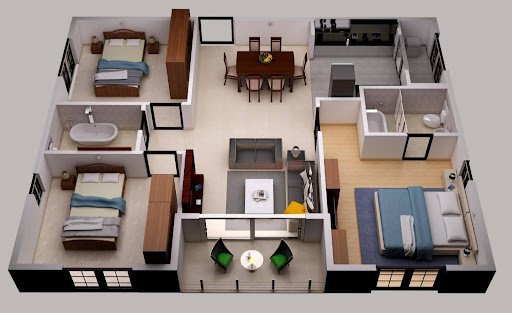
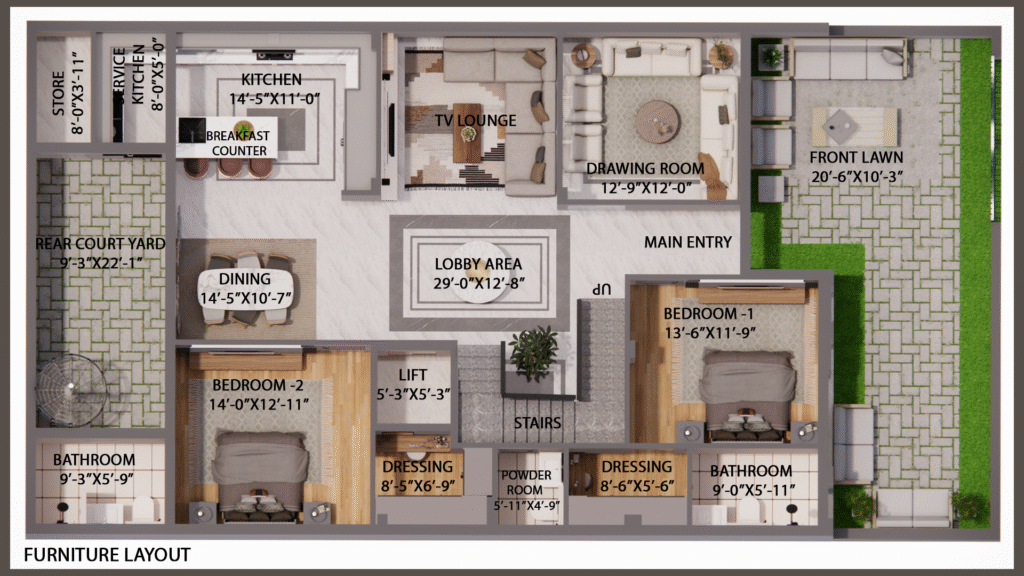
In the world of interior design and architecture, space planning is the cornerstone of functionality and aesthetics. One of the most crucial aspects of space planning is the layout of furniture. Thoughtful furniture arrangement doesn’t just fill a room—it defines its purpose, facilitates movement, enhances visual harmony, and supports the lifestyle or workflow of its occupants. In this blog, we’ll explore the vital role of furniture layout in space planning, examining its impact on both residential and commercial environments. What is Furniture Layout in Space Planning? Furniture layout is the strategic placement of furniture within a space to optimize the room’s use, flow, and aesthetics. It involves choosing the right furniture pieces, determining their sizes, and positioning them to maximize efficiency and comfort. Good furniture layout considers multiple factors such as the size of the space, architectural features, usage patterns, accessibility, and style preferences. Why Furniture Layout Matters Furniture layout plays a key role in space planning for several reasons: 1. Defines Functionality Every room has a purpose, and furniture layout helps reinforce that function. For example: A poorly planned layout can confuse the function of a space, making it uncomfortable and inefficient. 2. Enhances Traffic Flow Efficient movement is essential in any well-designed space. Furniture should not block doorways, windows, or pathways. A smart layout ensures there’s enough clearance for people to walk freely, especially in high-traffic areas. The general rule is to leave at least 2 to 3 feet of walking space around furniture. 3. Promotes Comfort and Accessibility Proper furniture layout takes into account ergonomics and accessibility. In residential spaces, it means positioning sofas, beds, and chairs where they can be used comfortably. In commercial spaces, it includes ensuring desks are placed at the right distance from computers or monitors, and meeting spaces are accessible to everyone, including those with disabilities. 4. Maximizes Space Utilization Especially in small rooms or compact office spaces, the right furniture arrangement can make the area feel more spacious and organized. It helps in utilizing every square foot without cluttering the room. 5. Improves Aesthetics A well-balanced furniture layout contributes to the visual harmony of a space. It helps highlight focal points, such as a fireplace or a piece of art, and maintains symmetry or intentional asymmetry that complements the design style. Principles of Effective Furniture Layout To create a functional and beautiful layout, space planners follow several guiding principles: • Balance Distribute visual weight evenly across the room. Avoid putting all heavy or large pieces on one side. • Scale and Proportion Match the size of the furniture to the size of the room. Oversized furniture can overwhelm a small space, while too-small furniture may look out of place in a large room. • Focal Point Identify and highlight a focal point, like a window with a view, a TV, or a fireplace, and arrange furniture around it. • Rhythm and Flow Create a sense of movement by aligning furniture in a way that naturally guides people through the space. • Functionality First Ensure that the layout supports the room’s primary function without unnecessary obstacles. Residential vs. Commercial Furniture Layout Furniture layout plays a different role depending on the type of space: 🏠 Residential Spaces In homes, furniture layout focuses on comfort, lifestyle, and personal preferences. Key considerations include: Example: In a family room, a sectional sofa arranged around a coffee table and television creates a cohesive and inviting space for family gatherings. Commercial Spaces In offices, retail stores, or hospitality venues, layout aims to support productivity, branding, and customer experience. Key considerations include: Example: In an open office, workstations may be arranged in clusters to promote teamwork, while quiet zones are designated for focused tasks. Technology in Furniture Layout and Space Planning Modern technology has revolutionized space planning, allowing designers and planners to use digital tools for layout optimization. Tools like: These tools help visualize and test different furniture layouts before implementation, reducing costly errors and allowing clients to see the finished design virtually. Common Furniture Layout Mistakes to Avoid The Psychology of Space and Furniture Arrangement Furniture placement affects more than just how a room looks—it impacts how people feel and behave in a space. For instance: Understanding the psychology of spatial arrangements helps designers create environments that promote well-being, creativity, and efficiency. Tips for an Ideal Furniture Layout Final Thoughts The layout of furniture is more than just arranging pieces in a room—it’s a strategic component of space planning that influences how spaces are used, experienced, and enjoyed. A well-thought-out furniture layout enhances comfort, promotes efficient use of space, and contributes to the overall success of interior environments. Whether you’re designing a cozy living room, a productive office, or a high-traffic commercial space, investing time in planning your furniture layout will pay off in comfort, style, and functionality. If you’re planning a new space or looking to redesign an existing one, consider consulting a space planning professional to help you get the most out of your furniture layout

Uncategorized

From Sketch to Screen: Our Layout Creation Workflow

Every Space Craft layout starts with a rough sketch—sometimes on paper, sometimes digital. From there: We build wireframes for structure. Moodboards shape the aesthetic direction. High-fidelity mockups bring it all together. Code is written with performance and responsiveness in mind. We test, iterate, and polish.This workflow ensures consistency, beauty, and usability in every design. You don’t just get a layout—you get a crafted experience.

Uncategorized

Why Layout Matters: More Than Just Looks

A good layout is more than eye candy—it’s strategic. It guides the user’s journey, highlights what matters, and ultimately influences action. With smart spacing, clear hierarchies, and responsive behavior, a well-crafted layout can increase conversion rates by up to 50%. At Space Craft Layouts, we blend form and function to give you an edge. A layout isn’t just design—it’s your first impression.

Space Planning
Uncategorized

Top 5 Trends in Web Layouts for 2025

The digital space evolves fast, and your website layout should too. In 2025, we’re seeing a surge in trends like: Fluid Grids that adapt seamlessly across devices AI-Driven Personalization for dynamic content display 3D and Parallax Elements that bring depth Micro-interactions that delight and inform Dark Mode Aesthetics for sleek, modern vibesAt Space Craft Layouts, we incorporate these trends while ensuring usability and speed. Stay tuned for fresh templates that embrace these innovations.

Contact Design Space
Uncategorized

Behind the Design: Crafting Layouts That Inspire

Designing isn’t just about structure—it’s about storytelling. At Space Craft Layouts, each layout is the result of countless hours of sketching, prototyping, and pixel-perfect refining. Our goal is to create layouts that not only look stunning but also feel intuitive and immersive. Whether it’s a minimalist portfolio or a vibrant agency site, every element is carefully curated to reflect your brand’s soul. Go behind the scenes with us and see how design becomes experience.

Scroll to Top