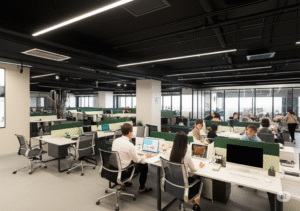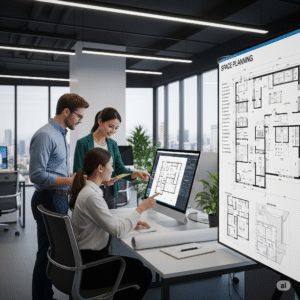

In today’s fast-paced business world, office design is more than just choosing furniture or applying a fresh coat of paint. It’s about creating a space that enhances productivity, supports collaboration, improves employee well-being, and adapts to ever-evolving work styles. At the heart of all this lies one fundamental principle: space planning.
Whether you’re setting up a new office or redesigning an existing one, space planning plays a crucial role in determining how your team works, communicates, and thrives. This blog explores why space planning is essential for a productive office design and how it can transform your workplace experience.
What Is Space Planning?
Space planning is the strategic organization and arrangement of physical spaces to maximize their efficiency, functionality, and usability. In the context of office design, it involves:
- Analyzing workflow and employee needs
- Allocating zones for different activities (workstations, meeting areas, break zones)
- Ensuring comfort, accessibility, and safety
- Creating layouts that support the organization’s goals and culture
Good space planning ensures that every square foot of the office contributes to productivity and employee satisfaction.
1. Improves Workflow and Efficiency
An intelligently planned office space removes physical and psychological barriers to productivity. For example:
- Task-focused zones help reduce distractions by placing quiet zones away from collaborative or high-traffic areas.
- Logical layouts ensure that departments that frequently collaborate are placed close to each other.
- Optimized circulation paths reduce time wasted moving between desks, printers, meeting rooms, or amenities.
When employees can move and work freely without unnecessary disruption, their focus and output naturally increase.
2. Boosts Employee Morale and Satisfaction
Your office environment has a profound impact on how your employees feel at work. A cramped or cluttered layout can create stress and discomfort, while a well-planned space:
- Offers ample personal space for focus and privacy
- Includes breakout areas for informal discussions or rest
- Provides ergonomic furniture and comfortable settings
- Enhances access to natural light and greenery
Employees who feel comfortable in their environment are more likely to be engaged, satisfied, and loyal to your organization.
3. Supports Collaboration and Communication
Today’s workplaces often thrive on teamwork, creativity, and communication. A successful office layout balances open collaboration areas with quiet zones. Space planning makes this possible by:
- Creating open workstations for team interaction
- Designing meeting rooms with varied capacities and functions
- Incorporating shared spaces like lounges or brainstorming areas
- Considering acoustic design to reduce noise and distractions
By fostering spontaneous collaboration without disrupting focused work, space planning helps teams work smarter.
4. Adapts to Changing Work Styles
The modern office isn’t static. Hybrid work, remote collaboration, hot-desking, and flexible schedules are redefining how space is used. Space planning allows you to:
- Design for flexibility, using modular furniture and movable partitions
- Incorporate technology into conference rooms and workstations
- Create multipurpose zones that serve different functions throughout the day
- Plan for growth, ensuring scalability without frequent renovations
With thoughtful planning, your office can evolve alongside your team’s needs.
5. Enhances Space Utilization and Cost-Effectiveness
Renting or owning commercial real estate is expensive. Without a proper plan, businesses may waste space on unused areas or unnecessary features. Smart space planning helps you:
- Maximize usable square footage
- Avoid overcrowding or underutilized zones
- Minimize operational costs through efficient layouts
- Reduce energy consumption with better zoning and lighting
By making the most of your physical environment, space planning turns real estate into a strategic asset rather than a passive expense.
6. Reflects Company Culture and Brand Identity
Your office is a physical representation of your organization’s values and culture. Whether you aim to portray innovation, professionalism, creativity, or inclusivity, space planning ensures that your layout tells the right story.
- Tech startups may favor open, vibrant layouts
- Law firms may prefer structured, private office plans
- Creative agencies may blend collaborative studios with casual zones
When your workspace reflects your mission and values, it strengthens your brand and improves team cohesion.
7. Promotes Health, Safety, and Accessibility
Post-pandemic office designs have re-emphasized health, safety, and well-being. Through effective space planning, you can:
- Ensure adequate spacing between workstations
- Create well-ventilated and naturally lit areas
- Include accessible features for employees with disabilities
- Provide hygienic layouts that allow easy cleaning and maintenance
Healthy employees are not only happier but also more productive and resilient.
8. Supports Focus and Minimizes Distractions
A noisy or chaotic environment kills concentration. Through space planning, you can separate zones based on noise levels and activities. For example:
- Dedicated focus areas for deep work
- Soundproof pods or booths for calls and virtual meetings
- Acoustic ceiling tiles, panels, or plants to absorb noise
- Placement of printers, copiers, and shared tech away from work zones
Employees can perform better when they are given the right environment to concentrate.
9. Facilitates Better Supervision and Management
Supervisors and team leaders benefit from clear sightlines and strategic workstation layouts. With space planning, you can:
- Create transparent team structures within the physical layout
- Design visual access to teams for better management
- Place managers closer to their departments for support and guidance
10. Future-Proofs the Office
Trends come and go, but the core need for adaptable, user-friendly workspaces remains. Good space planning:
- Prepares for technological upgrades
- Supports organizational changes like new departments or mergers
- Allows easy reconfiguration with minimal disruption
A future-proof layout reduces the need for frequent and costly overhauls.
How to Approach Office Space Planning Effectively
To ensure successful office design through space planning, follow these steps:
1. Assess Needs and Goals
Identify your team size, department structure, daily workflows, and goals. Understand your work culture and how people prefer to work.
2. Involve Employees
Include employees in surveys or feedback sessions to understand their needs. Their insights lead to user-centric designs.
3. Collaborate with Professionals
Interior designers, architects, and workplace consultants can help translate ideas into practical plans.
4. Use Planning Tools
Leverage CAD software or digital space planning tools to experiment with layouts before implementation.
5. Plan for Growth
Always leave room for expansion. Avoid cramming every inch with permanent fixtures.
Final Thoughts
Space planning isn’t just about aesthetics—it’s the foundation of a productive, healthy, and forward-thinking office environment. A well-planned space boosts efficiency, fosters collaboration, minimizes distractions, and reflects your company culture—all of which contribute to overall business success.
Investing time and resources into space planning is not a luxury; it’s a necessity for any organization that values its people and its performance.