
“Interior design is not a product you can pick off a shelf. It is a deeply personal, endlessly layered process — as unique as the people who live inside the space.”
As Interior Architects, one of the most common questions we hear is: “What is your rate per square foot?” And while we understand why clients ask this, the honest answer is — it doesn’t work that way.
Interior design is not a standardised product. It cannot be priced like tiles or paint. Every client is different. Every space is different. Every budget tells a different story. And every vision deserves a design that is built around it — not copied from a catalogue.
The Real Problems in Every Interior Design Project
Over years of practice, we’ve found that the most difficult part of designing a space is rarely the design itself — it’s the process of understanding the person it’s being designed for.
Clients Don’t Always Know What They Want
It’s more common than you think. A client walks in with excitement but no clear direction. They have feelings — “I want it to feel luxurious” or “I want it cosy” — but translating feelings into design decisions is a whole craft in itself.
The Pinterest Problem
Most Indian clients arrive with a folder full of Pinterest images. Beautiful rooms, yes — but often from different styles, countries, budgets, and contexts. They see only what a space looks like, rarely how it feels to live in it.
Focus on One Wall, One Piece of Furniture
A client fixates on a single TV unit they saw online. Or one particular tile pattern. They judge the entire concept through that one lens — missing how every element in a room works together as a whole.
The Language Barrier
Design has its own language — spatial flow, materiality, layering of light, proportion. When a designer talks about these, many clients hear only unfamiliar words. This gap in communication leads to misaligned expectations.
Decision Paralysis
When shown multiple design options, clients often freeze. Everything looks good. Nothing feels certain. This indecision stalls projects, frustrates designers, and ironically leads to worse outcomes than trusting one strong concept from the start.
Aesthetics vs. Functionality
Many clients prioritise how a space looks in photographs over how it actually functions in daily life. A stunning room that doesn’t work for your lifestyle is a beautiful mistake.
A young couple came to us wanting a “modern minimal” home. They had 40+ reference images — half were warm Japandi interiors, the other half were sleek white European apartments. These are almost opposite aesthetics. After two sessions of deep conversation about their daily routine, how they cook, how they entertain, whether they have children coming — it became clear what they actually needed: a calm, warm space with smart storage, not a showroom. The final design was nothing like their Pinterest board. They loved it more than anything they had pinned.
What Actually Shapes a Design
Before a single concept is drawn, four pillars define every project. These are not checkboxes — they are living conversations that evolve throughout the process.
Your Requirements
How you live, work, relax, and move through your home. The number of people, their habits, your storage needs — life itself.
The Space
Every room has a personality — light direction, ceiling height, structural constraints, views, and proportions that can’t be ignored.
Budget
Not a limitation — a parameter. Good design works within reality. Knowing the budget from day one means every decision is grounded and honest.
Design Preferences
Not “I like this image” — but deeper: Do you prefer warmth or coolness? Texture or sleekness? Colour or restraint? Open or intimate?
There is no universally good design or bad design. Design is good when the person living in that space feels at home, at peace, and like themselves. That feeling cannot be found on Pinterest. It can only be found by understanding you.
For Any Space, There Are Unlimited Designs
This is something very few clients realise: for any given room, a skilled designer can create dozens — even hundreds — of completely valid, beautiful, and functional concepts. The question is never “which design is correct?” The question is “which design is correct for you?”
When a client locks onto one image from the internet, they are unknowingly closing hundreds of doors before they’ve even walked through the first one. They are making a final decision before the conversation has even started.
Example — The Living Room
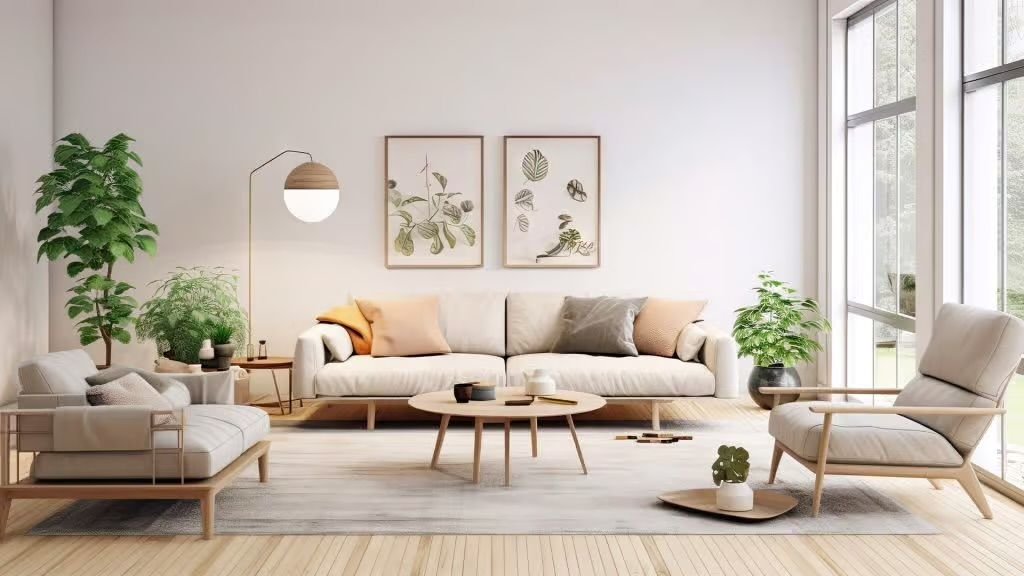
Take a standard 18×14 ft living room. We can design it as an open, airy space with floor-to-ceiling curtains and a low seating platform — perfect for a family that sits together on the floor for movie nights. Or we can turn the same room into a sophisticated lounge with structured sofas and layered lighting — ideal for a couple that entertains guests often. Or a children-friendly layout with durable surfaces and hidden storage. Three completely different designs. Same room. All correct — for different people.
A Better Way to Work Together
After years of working with clients across different backgrounds and budgets, we’ve developed an approach that creates better outcomes and far less stress for everyone involved.
Tell us how you live — not what you like
Instead of sharing Pinterest boards, share your daily life. What time do you wake up? Do you cook every day? Do you work from home? Do you need silence or do you love music? This information is worth more than a hundred reference images.
Share functional needs and colour preferences — then step back
Tell us what you need the space to do. Tell us if you love warm tones or cool ones. Then trust your designer to create the concept. You hired an expert — give them the freedom to practise their expertise. The creative direction is where designers do their best work.
React to feelings, not details
When a concept is presented, don’t immediately say “I don’t like that sofa.” Instead, ask yourself: does this space feel right? Does it feel like me? The details can always change — the overall feeling is what matters. One piece of furniture doesn’t make or break a design.
Trust the process, not just the renders
3D renders are approximations. The real space — with actual light, texture, warmth, and proportion — always looks and feels different. Clients who trust the design process rather than obsessing over renders consistently end up happier with the final result.
Commit to one direction
The biggest enemy of good design is indecision. Once a direction is agreed upon, commit to it. Changing concepts midway doesn’t create a better space — it creates a confused one. The best interiors come from one strong, consistent vision executed with confidence.
Example — The Bedroom Transformation
A client once rejected three-bedroom concepts because each one had a headboard she felt was “too modern.” When we asked her to describe how she wanted to feel when she woke up each morning, she said: “Like I’m on a holiday. Calm. Unhurried.” We redesigned around that feeling — warm wood tones, soft linen, gentle morning light through sheer curtains, and a reading corner. No dramatic headboard. She called it the best room she’d ever slept in. The headboard was never the point — the feeling was.